Tina Deines for North Valley News
It’s a balmy summer afternoon and I’m wandering around south Albuquerque’s Brent Baca Memorial Disc Golf Course, hot on a tip about Naomi’s whereabouts.
This may sound like the plot of a true crime show, but it’s not. Naomi was a 40-foot cottonwood tree estimated to be around 80 to 100 years old at her time of death—aka her felling in preparation for the construction of the Montano Bridge in 1995. The tree, and bridge, were the center of a huge environmental controversy in Albuquerque at the time, and tree huggers lovingly named the cottonwood Naomi.
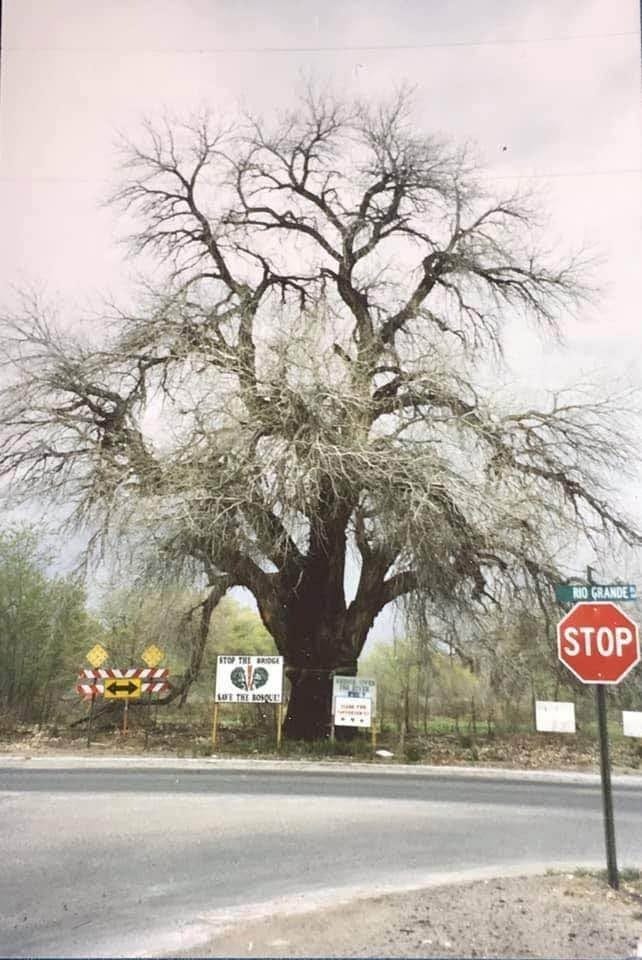
“For North Valley residents, this tree symbolizes a unique bosque (wooded area), and a way of life rare in most American cities,” High Country News reported at the time. “The valley lies 10 minutes by car from downtown Albuquerque.”
Still, many Burqueños were supportive of the bridge, which helped increase traffic flow over the Rio Grande and into the North Valley.
But all was not lost that day for Naomi and her devotees. Sometime after the tree was bulldozed, cuttings—pieces taken from a tree that can be planted to establish a new tree from the parent—were taken. At least one of them ended up at the disc golf course along with a memorial sign, according to a commenter on a Facebook post about Naomi.
However, I found no trace of the resulting tree or sign during my trip to the disc golf course, and my queries to the city’s Parks and Recreation Department were fruitless. It’s unclear whether the tree eventually died or if the sign had just disappeared, as there were several trees on the grounds that could have been Naomi’s kin.
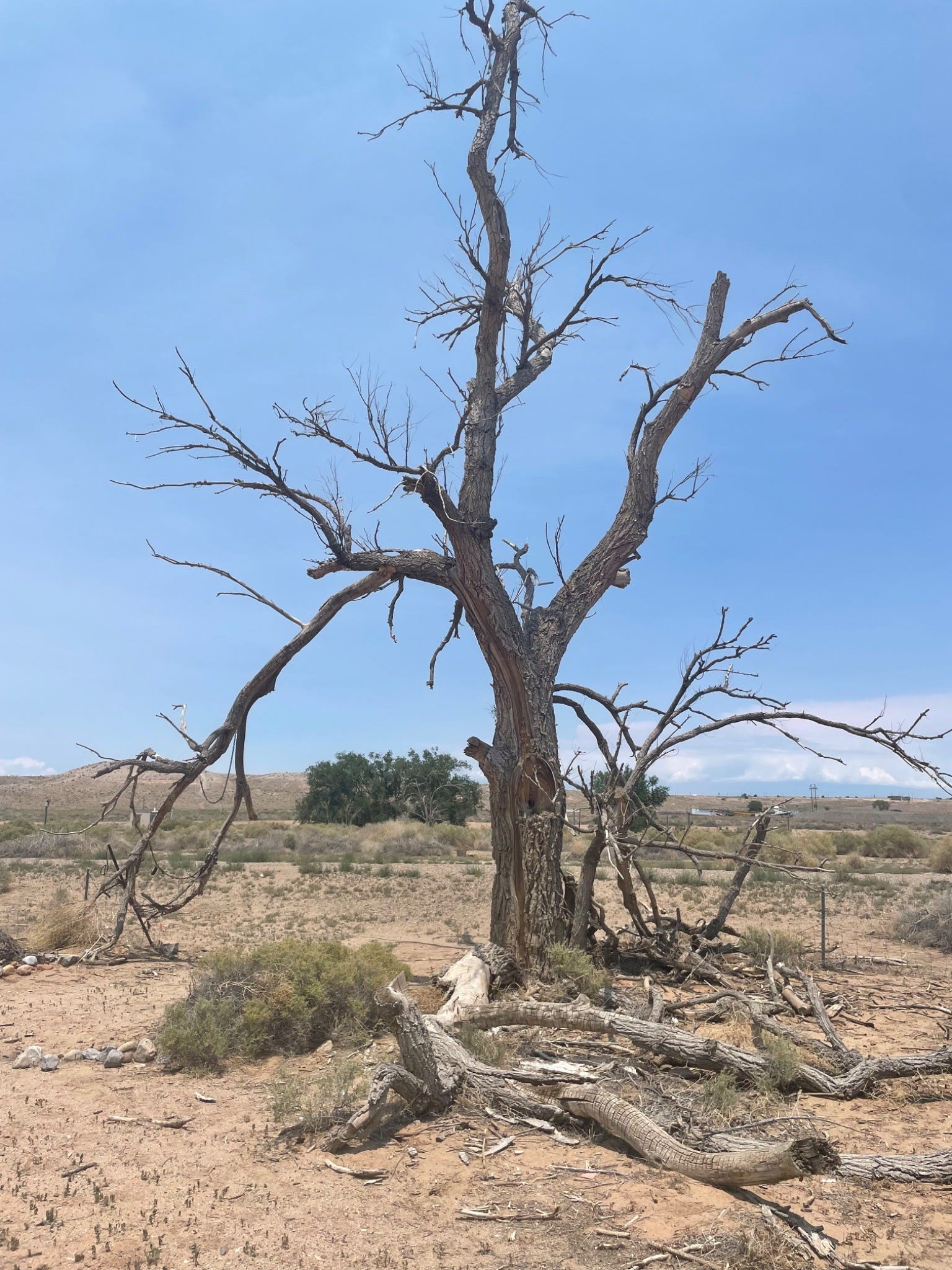
There was another rumor that some of Naomi’s “children” were planted across the ABQ BioPark. While I could not confirm this, I did exchange some emails with former Botanic Garden Manager Catherine Hubbard, who was working there at the time.
“I remember that our zoo horticulturist got some cuttings from a cottonwood that was at the center of a controversy when the Montano bridge was being built,” she said. “I don’t remember that any of the cuttings were planted at the BioPark, but I know they were sold to the public at a plant sale. I purchased a cutting myself.”
The cutting, which she planted at her home in southeast Albuquerque, has survived more than three decades, carrying on Naomi’s genes—cuttings are identical clones to their parents—and legacy. Hubbard said the tree is a bit small for its age due to other trees shading it out and conservative watering practices.
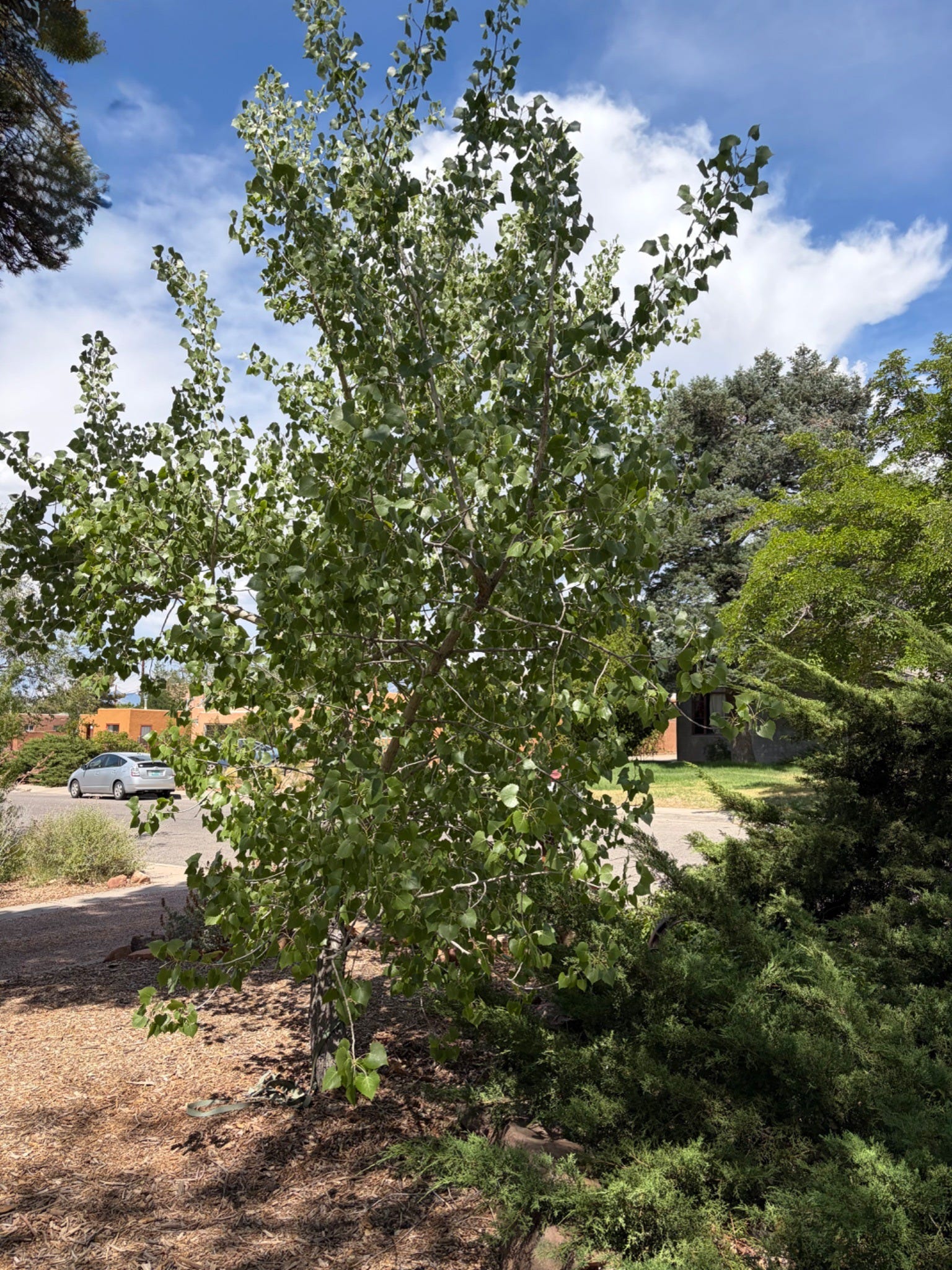
As for me, I’m relieved to know that at least one of Naomi’s kin is standing strong after all these years.
Still, I can’t help but wonder how the rest of the cuttings fared. I’m hopeful that at least a few are providing shade quietly across Albuquerque neighborhoods, a resource that we need more than ever as temperatures climb.

